Research · 2026
Hybrid Deterministic-Neural Agents
M.Sc. thesis: keeping LLM agents grounded over long horizons
“From Reactive Control to Holistic Planning: Evolutionary Prompt Optimization for Hybrid Deterministic-Neural Agents in Long-Horizon Environments”. An open-source Python framework where a deterministic engine grounds every LLM decision in computed facts.
- Python
- LLM Agents
- Constrained Decoding
- Prompt Optimization
- Evaluation
The problem
LLM agents are good at the next step and bad at the next hundred. Over long horizons, small reasoning mistakes compound: an agent misreads the state once, plans on top of the error, and drifts further with every step.
The approach
My M.Sc. thesis at Leuphana pairs a deterministic symbolic engine with LLM planning agents:
- The engine computes the facts (state, legal moves, consequences) exactly, so the model never has to guess them.
- Hybrid agent orchestration lets the language model plan while the engine checks every step.
- Constrained decoding keeps outputs valid by construction.
- Evolutionary and reflective prompt optimization improves the agent's instructions automatically instead of by hand.
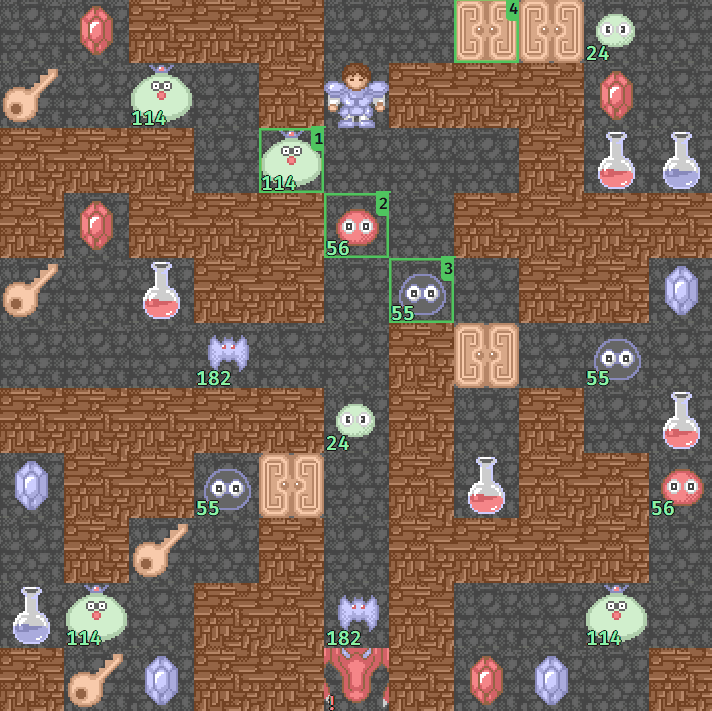
The benchmark environment is MoTA — a procedurally generated dungeon where agents must plan across many steps to survive, collect items, and reach the exit.
Evaluation
A reproducible benchmark compares frontier transformer models with and without grounding. The result: structured factual grounding and per-step verification are what stop cascading reasoning errors in long-horizon decision making.
The thesis is submitted and awaiting its defense. I'll write it up properly on the blog afterwards.